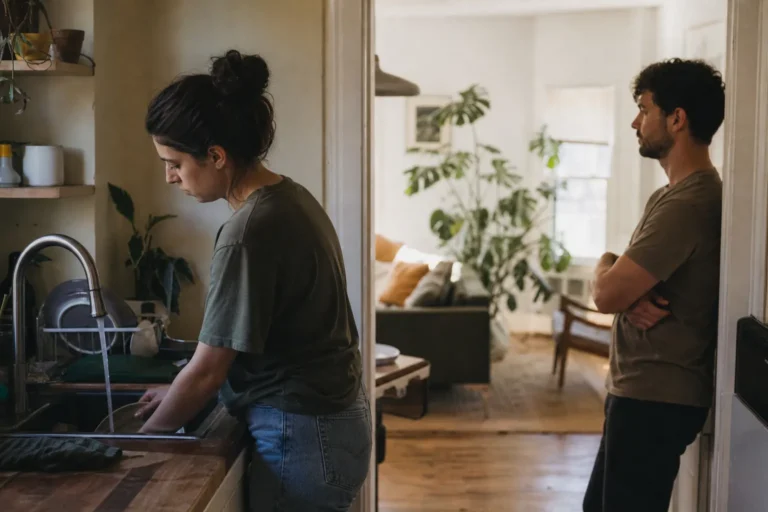


- Reconnection starts with how you listen and talk to your wife, not with grand gestures.
- Learning how she feels most loved, and showing it consistently, rebuilds warmth over time.
- You can’t make anyone love you. You can change your part in the pattern, and that often changes a lot.
Every marriage hits rough patches. Sometimes the closeness fades so slowly that you only notice once it’s gone: she seems tired of you, conversations are about logistics, and affection has dried up. If you’re searching for how to get your wife to love you again, you probably miss her. That’s a good place to start.
I want to be honest up front. There’s no trick that makes someone fall back in love, and anything that promises one is manipulation, which tends to make things worse. What you can do is look closely at your own part in how the two of you got here, and change it. When one person changes the steps, the whole dance has to shift. Bringing back warmth takes effort from both of you eventually, but it often starts with one person going first.
The basics are simple to say and hard to do: open, honest communication, real time together, appreciation that’s specific, and listening without getting defensive. Below is how I’d think about each one, drawing on what I see in couples therapy.
The basis of love and attachment
Love in a long marriage isn’t mostly a feeling that happens to you. It grows out of a steady stream of small interactions in which each of you feels seen and cared for. Over time those moments build attachment: the deep sense that this person is your safe place, the one who’ll turn toward you when you need them.
Your body is involved in this too. Touch and closeness help both of you feel calmer and more bonded, which is part of why couples who drift apart physically often drift apart emotionally as well, and the reverse.
Emotional intimacy is the heart of it. That means being open, letting yourself be vulnerable and supporting each other when things are hard. Couples who share what’s really going on inside tend to feel more connected than couples who only share the schedule.
Many people find Gary Chapman’s idea of the five love languages a helpful starting point. It suggests each of us has preferred ways of giving and receiving love:
- Words of affirmation
- Acts of service
- Receiving gifts
- Quality time
- Physical touch
It’s a simple framework, not a scientific one, but it opens a useful conversation: how does she feel most loved, and are you offering love in her language or only in yours?
When couples fall out of love, it usually happens gradually as emotional distance grows. Common causes are communication that turned into criticism or silence, conflicts that never got repaired, and a relationship that slid to the bottom of the to-do list. Often one partner has been reaching for a long time and finally stopped. If that’s your wife, her distance may be exhaustion more than indifference.
Communication as the Foundation
Good communication builds trust and closeness. It’s how two people stay known to each other as they both change over the years.
The importance of active listening
Active listening means giving your wife your full attention when she talks. Put the phone face down and turn off the TV. Look at her. Don’t interrupt, and don’t spend the time she’s speaking building your rebuttal.
Try to understand her point of view, even if you see it differently. Reflect back what you heard (“It sounds like you’ve felt alone with the house stuff for a long time”) and check whether you got it right. Ask questions because you want to know, not to win. This tells her that what she says matters to you.
A lot of wives who feel unloved actually feel unheard. If she’s been raising the same concern for years and it keeps getting brushed off or argued with, listening fully this time can matter more than anything else on this list.
Expressing Yourself with Words of Affirmation
Words of affirmation are things you say that tell her what you appreciate about her. Be specific, because general praise is easy to dismiss. Thank her for the things she does, big and small.
- “I love how patient you are with the kids at bedtime.”
- “Thank you for handling the insurance call. I know it was a pain.”
- “I’m proud of how hard you worked on that project.”
Share your own inner world too. Tell her when you’re happy, worried or hurt. Use “I” statements (“I felt shut out when…”) instead of “you” statements (“You always…”). That keeps the focus on your experience rather than on blame.
Appreciation only works if it’s genuine and steady. Said once as a tactic, it rings hollow. Said consistently, it helps her feel valued again.
Enhancing emotional connection
Rebuilding a strong bond takes deliberate care. Two of the most important places to focus are time together and fairness at home.
Quality time together
Make regular time to be together without an agenda. That might be a weekly date, a walk around the neighborhood after dinner, or coffee on the porch before the kids wake up. Put the phones away and give each other real attention.
New shared experiences help, too. A class, a weekend away or a new hobby gives you fresh memories and something to talk about beyond the household.
Daily connection counts as much as the big outings. Eat together without screens. Take ten minutes before bed to ask about each other’s day, and really listen to the answer. Small moments, repeated, add up.
Sharing responsibilities equally
In many marriages I see, resentment about the household load sits right underneath the lost affection. It’s hard to feel romantic toward someone when you feel like their manager.
Take on more without being asked. Notice what needs doing and handle it fully, including the planning and remembering, not just the doing. That invisible work, sometimes called the mental load, is often what exhausts her most.
It can help to sit down together, list everything it takes to run your home and divide it in a way you both think is fair. And offer emotional support as well as practical help. Ask about her day, listen and help think things through when she wants that. Be a partner in all of it.
Physical expression of love
Physical closeness plays a real part in rebuilding a romantic connection. But it has to be offered, never pressured. If she’s pulled away physically, pushing for more will usually push her further.
Understanding physical touch as a love language
Touch is a powerful way to express care. A hand on her back, a hug when she gets home, sitting close on the couch. Non-sexual affection matters a great deal, especially when it doesn’t come with an expectation attached.
Pay attention to how she responds. Some people love a long hug and others prefer a brief squeeze of the hand. Ask what feels good to her, and respect it when the answer is “not right now.”
Increasing sexual intimacy
Rebuilding sexual intimacy takes time and patience, and for many people, especially in long relationships, desire follows emotional connection rather than leading it. If the rest of the relationship feels lonely, sex often will too.
Start by rebuilding warmth and safety. Flirt a little. Offer a massage with no expectation. When you’re both ready, make time for sex and protect it from distraction. Talk openly about what each of you likes and wants, and treat it as something you’re exploring together rather than a goal to hit. If mismatched desire has become a sore spot, intimacy therapy gives you a place to talk about it without blame.
Reviving Romance
Romance tends to fade when it’s left to chance. Bringing it back means being intentional.
Planning regular date nights
Set aside regular time for a date with your wife. Choose things you’d both enjoy, and mix it up so it doesn’t become another routine: a new restaurant, a picnic, a show, a drive somewhere you’ve never been.
Take the planning off her plate. Book it, arrange the babysitter, handle the details. On the date, put your phone away and get curious about her. Ask about her hopes, what she’s been thinking about lately, what she misses. You may find out things you didn’t know.
Treat date night like an appointment you wouldn’t cancel. Stepping out of your normal routine helps you see each other as people again, not just co-managers of a household.
Sending flirty texts and affections
Send her a message during the day just to say you’re thinking of her. Compliment her, thank her or remind her of a good memory. Keep it light, and keep it real.
A note left on the bathroom mirror or in her bag can mean a lot. So can a pet name you used to use, or a quick kiss on the way out the door. These small gestures help her feel wanted, as long as they’re expressions of how you feel and not moves you’re making to get a reaction.
Acts of service and appreciation
Love shows up in what you do. Thoughtful action, paired with gratitude, says “I see you” in a way words alone can’t.
Practical ways to show you care
- Do the tasks she usually handles without being asked or thanked: laundry, dinner, the school forms.
- Plan a surprise evening around something she loves.
- Leave a note thanking her for something specific she did this week.
- Give her real time off. Take the kids out for the afternoon so she can rest or do something just for her.
- Offer a back rub after a long day, with no strings attached.
Seeking professional support
Sometimes the distance is too big, or the hurt too old, to repair on your own. That’s not failure. It usually means you’ve been caught in a pattern that’s hard to see from the inside.
Understanding when to seek marriage counseling
It may be time to get help if you notice:
- Constant fighting, or fights that escalate fast
- Very little real communication
- Trust issues, including after an affair
- Feeling more like roommates than partners
Counseling gives you both a place to say difficult things without it turning into the same argument. It tends to work best when both of you are willing to look at your part.
The role of couples therapy
In my couples therapy work, I draw on approaches like the Gottman Method, Emotionally Focused Therapy and PACT. Together we’ll look at:
- How you each listen and respond, especially under stress
- The pattern underneath the surface arguments
- Where you each get stuck, and why
- How to rebuild emotional closeness
We focus on what’s happening now, while making room for old hurts that are still in the room. Between sessions you’ll have things to practice at home. There’s no set timeline. Some couples feel shifts fairly soon, while others need longer to work through deeper issues. If your wife has one foot out the door, discernment counseling may be a better first step, because it helps you decide together whether to work on the marriage before you start.
Maintaining consistency and patience
Rebuilding love takes time. Quick fixes rarely work, and a burst of effort that fades after two weeks can confirm her fear that nothing will really change.
Consistency is what rebuilds trust. Follow through on what you say. Show affection and appreciation regularly, not only when things are going well or when you want something.
Give her time to notice the change and to trust it. If she’s been hurt or let down for a long time, she may be cautious at first. That’s understandable, and it isn’t a reason to stop. Some steady habits that help:
- A small kindness every day
- Regular time together
- Listening without interrupting
- Doing your share without being asked
- Saying thank you often
Try not to get discouraged if things don’t shift right away, and don’t keep score of your efforts. Setbacks will happen. When they do, stay calm, own your part and keep going.
It’s also important to respect her answer. If she’s telling you she needs space, or that she’s not sure she wants to stay, listen to that rather than trying harder to convince her. Respecting her choices is part of loving her well, and it’s often what makes reconnection possible.
Frequently asked questions
These are some of the questions I hear most often from husbands who want to reconnect.
What steps can I take to make my wife fall in love with me again?
You can’t make her, but you can make it easier for love to come back. Show real interest in her life. Ask about her day and listen fully. Plan time together around what she enjoys. Thank her for specific things. And take seriously anything she’s told you about your behavior that hurts her. Changing that is often the most meaningful step.
Can a marriage be saved after a separation, and how can I reignite the love?
Some couples do reunite after separating. It takes both people being willing, honest conversations about what went wrong and usually some outside help. Go slowly. Spend low-pressure time together, rebuild trust in small steps and let the emotional and physical connection return at a pace that works for both of you.
How long does it take to rekindle romance in a marriage?
There’s no set timeline. Every couple is different, and it can take weeks, months or longer. Steady effort matters more than speed. Notice small improvements, and keep going when progress feels slow.
What helps restore emotional intimacy with my wife?
Let yourself be vulnerable and share what’s really going on with you. Listen to her without judgment. Spend time together without screens, try new things together and offer affection without expecting anything back. Gratitude, said out loud, helps more than most people expect.
Can we rebuild a loving relationship after infidelity?
Many couples work through an affair, but it’s some of the hardest repair there is. The affair needs to end completely, and honesty from here on is essential. Expect it to take time, and get support. My page on infidelity recovery explains how I work with couples after a betrayal.
Is it possible to reignite desire in my marriage?
Often, yes. Desire tends to return when there’s emotional safety, some playfulness and less pressure. Talk openly about what each of you wants. Focus on affection that isn’t leading anywhere, like cuddling or a massage. Take care of yourself, flirt during the day and plan time away together.
If you’d like help figuring out where to start, you can book a free 20-minute consultation, on your own or with your wife.