
What “high conflict” actually means
High conflict doesn’t mean you’re a bad couple, or that one of you is the villain. It usually means you’ve been caught in the same painful cycle for a long time, and it has started to run the relationship.
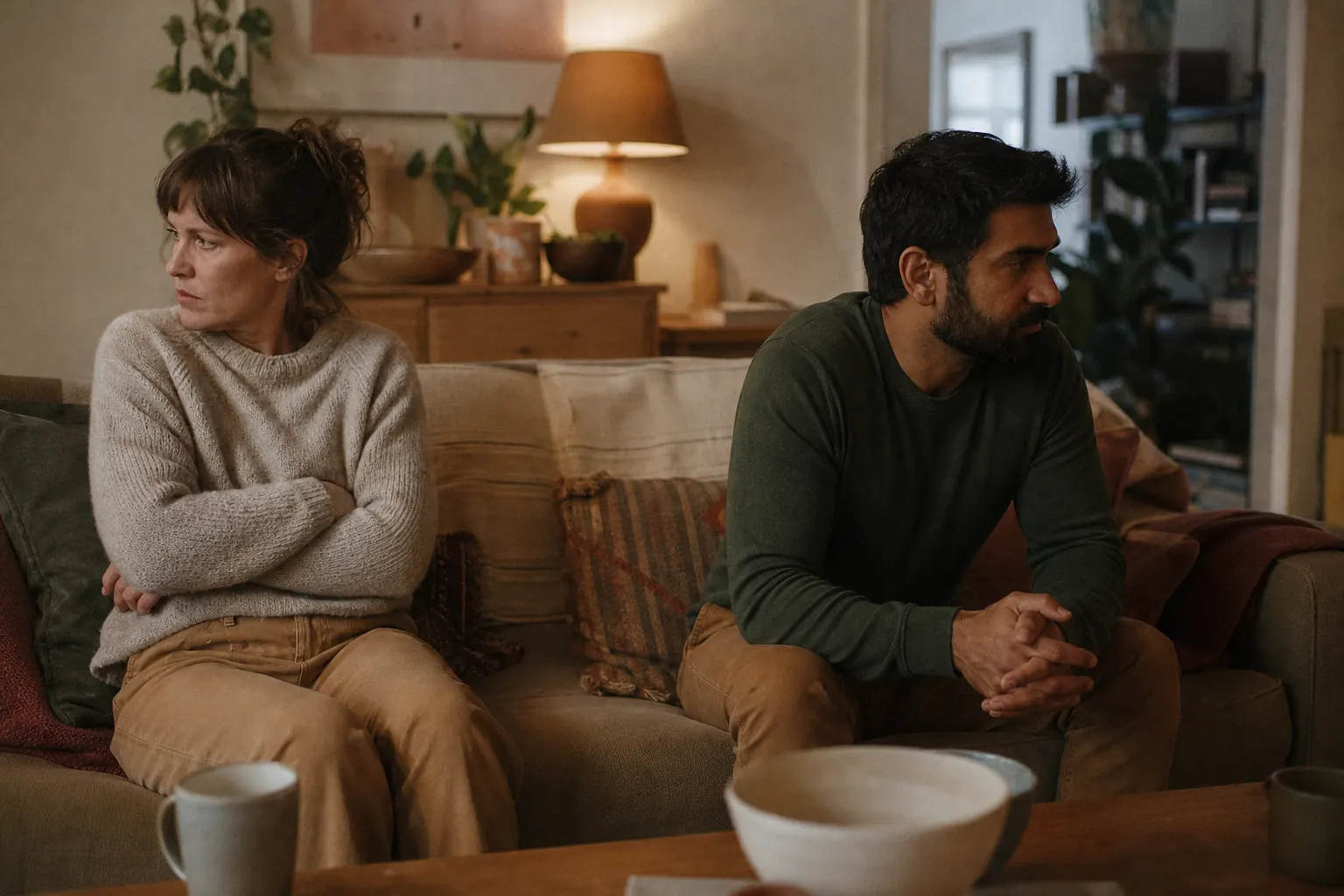
For some couples, that looks like loud fights that go from zero to a hundred over something small. For others, it’s quieter: criticism, sarcasm, cold silence that lasts for days. Often it’s both, with one partner pushing for a response and the other shutting down to get away from the pressure. Each of those moves makes the other one worse.
Most of the high-conflict couples I see are exhausted. They still care about each other. They just can’t seem to talk about anything that matters without it blowing up.
Signs you might be a high-conflict couple
- Arguments escalate fast, and afterward neither of you can remember how it got so bad.
- Small things, like the dishes, being late, or a tone of voice, set off big fights.
- One of you criticizes or blames, and the other gets defensive or withdraws.
- Fights end without repair. You just stop talking until it fades.
- Old resentments come back into every new argument.
- You feel like you’re walking on eggshells, or like you’re always on trial.
- You want to feel close, and you keep ending up further apart.
If several of these sound familiar, you’re not alone, and it isn’t hopeless. These are patterns, and patterns can be understood and interrupted.
Why the fights escalate so fast
When an argument heats up, your nervous system can switch into fight, flight or freeze. That’s your body’s alarm system, and it reacts in a split second, before your thinking brain catches up. John and Julie Gottman call this state “flooding”: your heart races, your hearing narrows, and you literally can’t take in what your partner is saying.
Once both of you are flooded, the conversation is no longer about the dishes. It’s two alarm systems reacting to each other. One partner’s raised voice feels like danger to the other. The other partner’s silence feels like abandonment. Both of you are trying to protect yourselves, and each of you experiences the other’s protection as an attack.
Often there’s an older story underneath too. The way you learned to handle conflict as a kid, or what happened when you needed something and didn’t get it, shapes how threatened you feel now. That’s why the fight is rarely about what it seems to be about.
The goal isn’t “no conflict”
Healthy relationships still have disagreements. Couples who do well aren’t the ones who never fight. They’re the ones who can calm down, come back, and repair. The goal of therapy isn’t to make you agree on everything. It’s to help you argue in a way that doesn’t leave damage, and to get back to each other afterward.
Together, we work toward:
- Understanding the cycle you keep landing in, and each person’s part in it
- Noticing when you’re getting flooded, and calming down before you say the thing you can’t take back
- Saying what you need without blame, and hearing your partner without defending yourself
- Repairing after a fight, instead of waiting for it to fade
- Rebuilding a sense that the relationship is a safe place to land
How I work with high-conflict couples
With high-conflict couples, I’m an active therapist. I won’t sit back and let you have your usual fight while I take notes. When things start to escalate, I’ll slow you down, sometimes stop you mid-sentence, and help each of you notice what’s happening in your body and what you’re really reacting to. Then we try a different move, right there.
That in-the-moment work matters, because insight alone doesn’t stop a fight. You can understand your pattern perfectly and still repeat it when you’re flooded. Practicing something different while you’re actually stirred up is what helps it carry over into your kitchen at 10 p.m.
I draw on several approaches:
- PACT, the Psychobiological Approach to Couple Therapy developed by Stan Tatkin, which works with attachment and stress responses as they happen between partners.
- Gottman Method, developed by John and Julie Gottman, for practical tools like softer ways to start a hard conversation and how to take a break and come back.
- Emotionally Focused Therapy, developed by Sue Johnson, to map the negative cycle and the needs and fears underneath it.
- Attachment-based work and interpersonal neurobiology, to understand how earlier experiences shape the way each of you reacts under stress.
- Mindfulness-based practices, simple ways to notice and settle your body when you start to get activated.
I don’t take sides. In high-conflict relationships, both people usually feel like the one who’s been wronged. My job is to understand both of you and the cycle between you. Nobody is the problem. The pattern is.
Will therapy just turn into another fight?
This is the fear I hear most from high-conflict couples, and it’s a fair one. Some couples have tried therapy where they fought in front of a therapist for an hour and went home worse.
Sessions with me have more structure than that. We agree early on how we’ll handle it when things heat up, including taking a pause. I’ll step in before an argument runs away with us. Hard things will come up, and some sessions will be uncomfortable. The difference is that you won’t be left alone in the middle of it.
When couples therapy isn’t the right fit
Couples therapy is for conflict between two people who both feel safe with each other. It isn’t appropriate when there is physical violence, threats, or one partner is afraid of the other or controls their money, movements or contact with other people. In those situations, joint sessions can make things more dangerous, and I’ll tell you honestly if I think that’s the case. If this sounds like your relationship, the National Domestic Violence Hotline is free and confidential at 1-800-799-7233, and individual therapy may be a better first step. If you’re in crisis, call or text 988. If someone is in immediate danger, call 911.
What to expect and what it costs
It starts with a free 20-minute video call, where you can tell me what’s going on and ask how I work. In our first sessions, I’ll want to hear how each of you sees the conflict, and we’ll start mapping the cycle you get stuck in.
High-conflict couples often benefit from weekly sessions at first, and sometimes from 90-minute sessions, which give enough time to calm down and repair before you leave. A Couples Intensive can also help if you want to make faster progress.
- 60-minute session: $250
- 90-minute session: $325
- Couples Intensives: $600 for 3 hours, $1,100 for 6 hours
I don’t bill insurance directly, but for regular sessions I provide a superbill for possible out-of-network reimbursement. Superbills aren’t available for intensives or retreats.
In person in Highland Park, or online across California
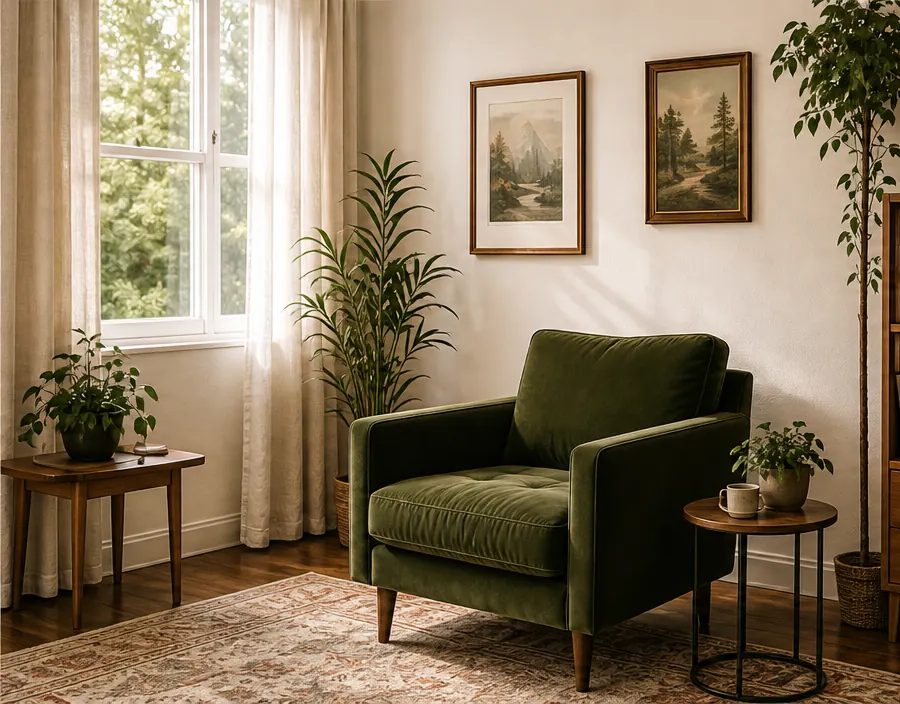
My office is at 5317 North Figueroa Street in Highland Park, close to Eagle Rock, Mount Washington, Glassell Park, Silver Lake, Echo Park, Pasadena and Glendale. I also see couples online anywhere in California. Some high-conflict couples find it easier to settle in their own home; others prefer the neutral ground of the office.
If you’d like to read more first, try ways to decrease arguments in your relationship or my broader page on couples therapy in Los Angeles. When you’re ready, book a free consultation.