
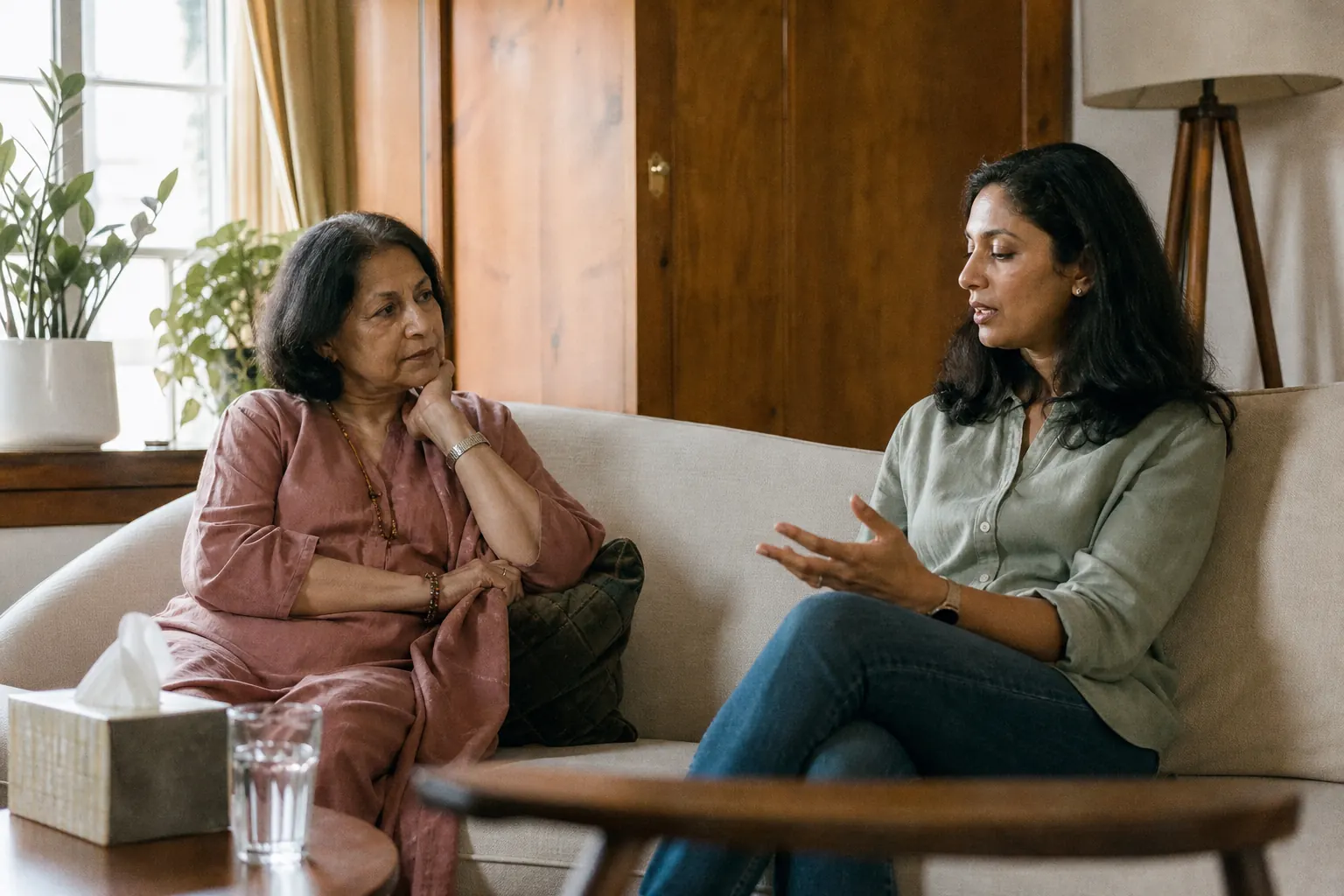


Therapy for two or more people
Some of the most important relationships in your life aren’t romantic. The creative partner or team that has lost its synergy. The co-founder you started the company with, who now feels like a stranger across the table. The bandmate you’ve written with for ten years, until every rehearsal ends in silence. The friend group of many years that no longer feels connected.
These relationships carry the same patterns couples get stuck in: the same argument on repeat, old roles nobody agreed to, hurt that never got named. They just rarely get the same care. Relationship therapy is where they can.
In relationship therapy, everyone involved comes to sessions together, whether that’s two people, a whole family, a group of friends or team members, or a band. My job is to help you understand the dynamic you’ve built, why it keeps happening, and how to relate to each other differently, without anyone being cast as the villain.
Who I work with
Business partners and creative partners
Northeast LA is full of people who make things together: co-founders, bandmates, writing partners, producing partners, people who run a studio or a restaurant side by side. These partnerships run on trust and shared vision, and when that breaks down, the work and the friendship both suffer. Therapy gives you a place to talk about resentment, credit, money, roles and burnout before they end the partnership, or to end it well if that’s where you land.
Friends, polyamorous relationships and other close groups
Long friendships, roommates, polyamorous relationships with more than two partners, and other relationships that matter can also get stuck. If it matters to all of you, it’s worth working on. For more on multi-partner relationships, see polyamory and non-monogamy therapy.
Adult siblings
Caring for an aging parent, an inheritance, a sibling who always seemed to be the favorite. Siblings often fall back into the roles they had at twelve. See sibling therapy.
Family estrangement
When contact has been cut off, or is hanging by a thread, a first conversation in a structured setting can feel more possible than one at the kitchen table. Reconnection isn’t always the goal. Sometimes it’s understanding, or a clearer boundary. See family estrangement therapy.
Parents and adult children
The relationship has to change shape when a child becomes an adult, and it often doesn’t. Old hurts from childhood, boundaries around grandchildren, money, lifestyle or identity. See parent and adult child therapy.
Mothers and daughters
Love and criticism can arrive in the same sentence. Maybe every visit starts warm and ends with someone in tears in the car. We look at the roles you each learned and the needs underneath them. See therapy for parents and adult children.
Signs relationship therapy might help
- You have the same argument every time you’re together, often about something small.
- One of you feels responsible for managing the other’s emotions.
- Conversations go well until a certain topic, and then they fall apart.
- You avoid each other to keep the peace, and the distance is growing.
- There’s an old hurt that never got talked about.
- You’re about to make a big decision together, like caring for a parent or restructuring a business, and you can’t get on the same page.
How this is different from couples therapy
Relationship therapy uses many of the same skills as couples work, but it isn’t couples therapy. There’s no romance or sex to repair, and the goals are often different. A mother and daughter may want to improve their communication so they stop dreading holidays. Business partners may want a fair way to make decisions. Siblings may want to grieve a parent without fighting about the will. Creative partners may want to learn how to reach compromises.
The relationships also carry different weight. Family patterns may go back decades. Business partnerships involve money, contracts and other people’s livelihoods. Creative relationships touch on identity, so disagreements about the work are easy to take personally. I take that into account, and we set goals that fit the relationship you actually have. If you’re a romantic couple, couples therapy is the better fit.
How I work
Often, the problem isn’t the disagreement itself. It’s what happens underneath: emotional triggers, stress responses, old expectations, and protective habits each of you learned long ago. When one person raises their voice, the other may go quiet, which makes the first one push harder. Nobody chose that cycle, but everyone keeps it going.
I draw on attachment-based work and interpersonal neurobiology, which look at how early relationships shape the way we react and protect ourselves now, and how a relationship can become a place where those patterns change. I also borrow tools from couples methods where they fit people who aren’t a couple: structured dialogue from Imago, developed by Harville Hendrix and Helen LaKelly Hunt, which slows conversations down so each person actually hears the other, and Gottman ideas about how to start hard conversations gently and repair after one goes wrong.
Therapy here is active. I won’t just listen and nod. I’ll name what I see, slow things down when a conversation starts to escalate, and give you something to practice before the next session.
Nobody is the problem. The pattern is.
When one person holds more power
Many non-romantic relationships aren’t equal. A parent still holds the family history and sometimes the money. One business partner may own more of the company. One sibling may be the caregiver while the other lives across the country. One band member may have more writing credits. I pay attention to that, out loud, so the less powerful person isn’t quietly carrying the weight of the session.
What changes outside of therapy
Insight is the start, not the goal. What I hope you notice between sessions is practical: a phone call that ends without a slammed door, a meeting that doesn’t end with someone abruptly walking away, a disagreement about money that gets settled instead of buried, a holiday you don’t spend bracing for the comments, a show that feels good and successful. Changes like these tend to add up, because each one shows everyone involved that the old pattern isn’t the only option.
What to expect
It starts with a free 20-minute video call. One of you can book it, and you can tell me who’s involved and what’s going on. We’ll talk about whether I’m the right fit.
Everyone involved attends sessions together. In the first session, I’ll hear how each of you sees the relationship, what you want from therapy, and what you’re worried will happen. Neither of you will be asked to defend yourself, and I won’t decide who’s right. We usually meet weekly to start, then space sessions out as things improve.
If the other person isn’t ready to come in, you can still work on your side of the pattern in individual therapy.
How much does relationship therapy cost?
- 60-minute session: $250
- 90-minute session: $325
Many people choose 90-minute sessions, especially early on or when more than two people are attending, so there’s time to get past the warm-up. I don’t bill insurance directly. I provide a superbill for possible out-of-network reimbursement, though coverage for therapy involving family members or partners varies, so check with your plan.
In person in Highland Park, or online across California
My office is at 5317 North Figueroa Street in Highland Park, near Eagle Rock, Mount Washington, Glassell Park, Silver Lake, Echo Park, Pasadena and Glendale. Online sessions are available anywhere in California, which helps when family members live in different cities or business partners keep different schedules. You can each join from your own location.
When you’re ready, book a free consultation.