
A couples therapist for West Hollywood, starting online
If you live in West Hollywood and you’re looking for a couples therapist, here is the honest starting point: my office isn’t in West Hollywood. It’s in Highland Park, on LA’s Northeast side. Most couples who find me from West Hollywood work with me online, from their own living room, and some make the trip across town when they want to sit in the same room with me. Both are good options. I see couples online anywhere in California.
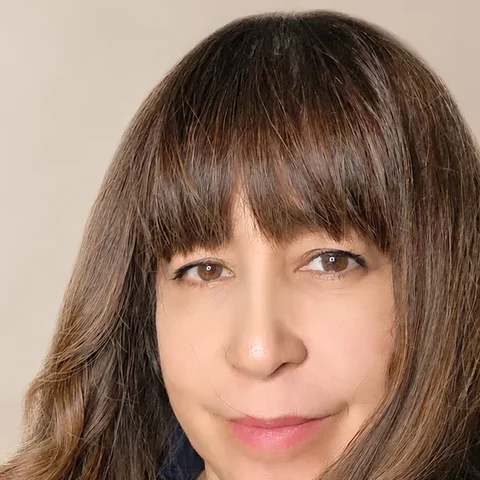
I’m Tina Marie Del Rosario, a licensed clinical social worker (LCSW) with more than 13 years of experience with couples and individuals. I also teach at the college level and supervise other therapists. This is a solo practice, so the person you meet on the free consultation is the person you’ll do the work with.
Who I see from West Hollywood
West Hollywood has been a center of LGBTQ+ life in Los Angeles for decades, and many of the people who contact me from there are queer couples, trans and nonbinary partners, and people in open or polyamorous relationships. Plenty are not. I also see straight couples, couples a year into dating and couples twenty years into a marriage. What they tend to share is the reason they reach out: the same fight keeps coming back, or the closeness has quietly drained away and neither person can say exactly when it happened.
Couples are the center of my work. I also see relationships of two or more people that aren’t romantic, like adult siblings, a parent and adult child, business partners, co-writers and bandmates. And I work with individuals who want to understand the pattern they keep repeating with partners.
LGBTQ+ couples therapy without the explaining
You shouldn’t have to spend your first few sessions educating your therapist. I’m LGBTQIA+ affirming, which in practice means your relationship is the starting point, not something to defend. We can get straight to what brought you in: the argument that escalates in under a minute, the partner who goes silent, the trust that took a hit.
Queer couples sometimes carry things that a therapist should know to ask about. Family acceptance that came late, or not at all. Partners who came out at different times or to different people. Building a long relationship without many examples of what that could look like. Sometimes these sit right underneath the fight about the dishes. Sometimes they aren’t the issue, and I won’t assume they are. I go into more detail on my page about LGBTQ+ couples therapy.
Open relationships and polyamory
More and more of the people who contact me are opening a relationship, already living polyamorously, or trying to repair agreements that got broken. I’m affirming of ethical non-monogamy (relationships where everyone involved knows about and agrees to more than one partner). I’m not going to steer you back toward monogamy or treat the structure as the problem.
The work usually centers on jealousy, on the agreements themselves, on how an existing relationship holds up when someone new arrives, and on the attachment fears (the old, deep worry about whether you matter and whether people stay) that get stirred when your place feels less certain. Other partners can join sessions when that helps. More on this at polyamory and non-monogamy therapy.
What wears couples down
A lot of couples I hear from in this part of town work in entertainment, hospitality or creative fields, and those jobs rarely keep regular hours. One partner is on set for fourteen hours while the other is home by six. Someone works nights and weekends. A tour or a shoot takes a partner away for weeks, and coming home turns out to be harder than leaving. Income arrives in waves. None of this means a relationship is failing. It does make it easy to drift into parallel lives, and hard to find the time to repair after a bad night.
In sessions I look at how those schedules are landing on each of you, and what happens in your nervous systems (the body’s automatic alarm and calm-down responses) when one person needs connection and the other is running on empty. That is usually where the pattern lives.
How I work with couples
Many couples who reach me have already tried therapy. They learned to use “I statements” and take turns, and then had the same fight in the car on the way home. Understanding each other better doesn’t stop a pattern on its own, because when a fight starts, your bodies react faster than any script.
So I work with what happens in the moment. We slow the cycle down while it’s happening in the session, notice how each of you gets triggered and what you do to protect yourself, and try a different move together. I draw on PACT, Imago, attachment-based work, interpersonal neurobiology, the Gottman Method and Emotionally Focused Therapy (EFT), and use what fits you. I don’t take sides. Nobody is the problem; the pattern is. You can read more about my approach on the couples therapy page.
If your schedules make weekly sessions hard, or you want to move faster, a couples intensive gives you three or six hours of focused work in one block, online or in person.
Online sessions, or coming to Highland Park
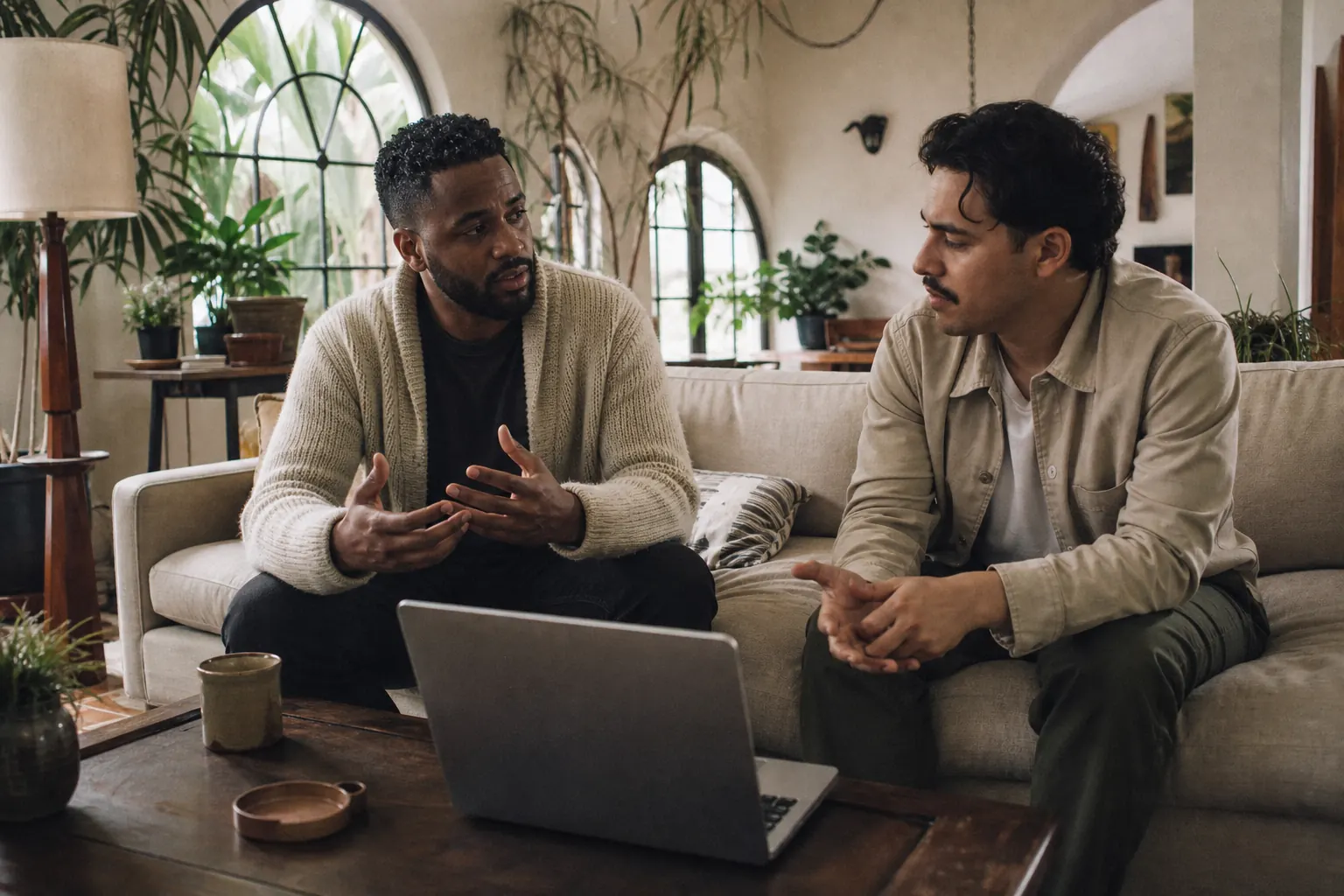
Online couples therapy works well for most people. You join a secure video call from home, skip the drive, and have the session in the same space where your arguments actually happen. Some couples sit side by side on one screen. A partner who is away for work can join from wherever they are in California. Read more about online therapy in California.
If you’d rather be in the room together, my office is at 5317 N Figueroa St, Los Angeles, CA 90042, in Highland Park. From West Hollywood, many people head east to the 101 toward downtown, then take the 110 north toward Pasadena, which runs alongside Figueroa through Highland Park. Others prefer surface streets. Crosstown traffic changes a lot by time of day, so plan generously. Parking near the office is street parking. Some couples mix the two: online most weeks, in person when something big needs working through.
Fees and getting started
Sessions are $250 for 60 minutes and $325 for 90 minutes. Individual sessions are $175 for 50 minutes and $225 for 80 minutes. Couples intensives are $600 for three hours and $1,100 for six. I don’t bill insurance. For regular sessions I provide a superbill you can submit for out-of-network reimbursement. Intensives and retreats aren’t covered by a superbill.
The first step is a free 20-minute video consultation. You tell me what’s going on, ask me anything you want to know, and we see whether I’m the right fit for you. No pressure, just a conversation. Book your free consultation.