
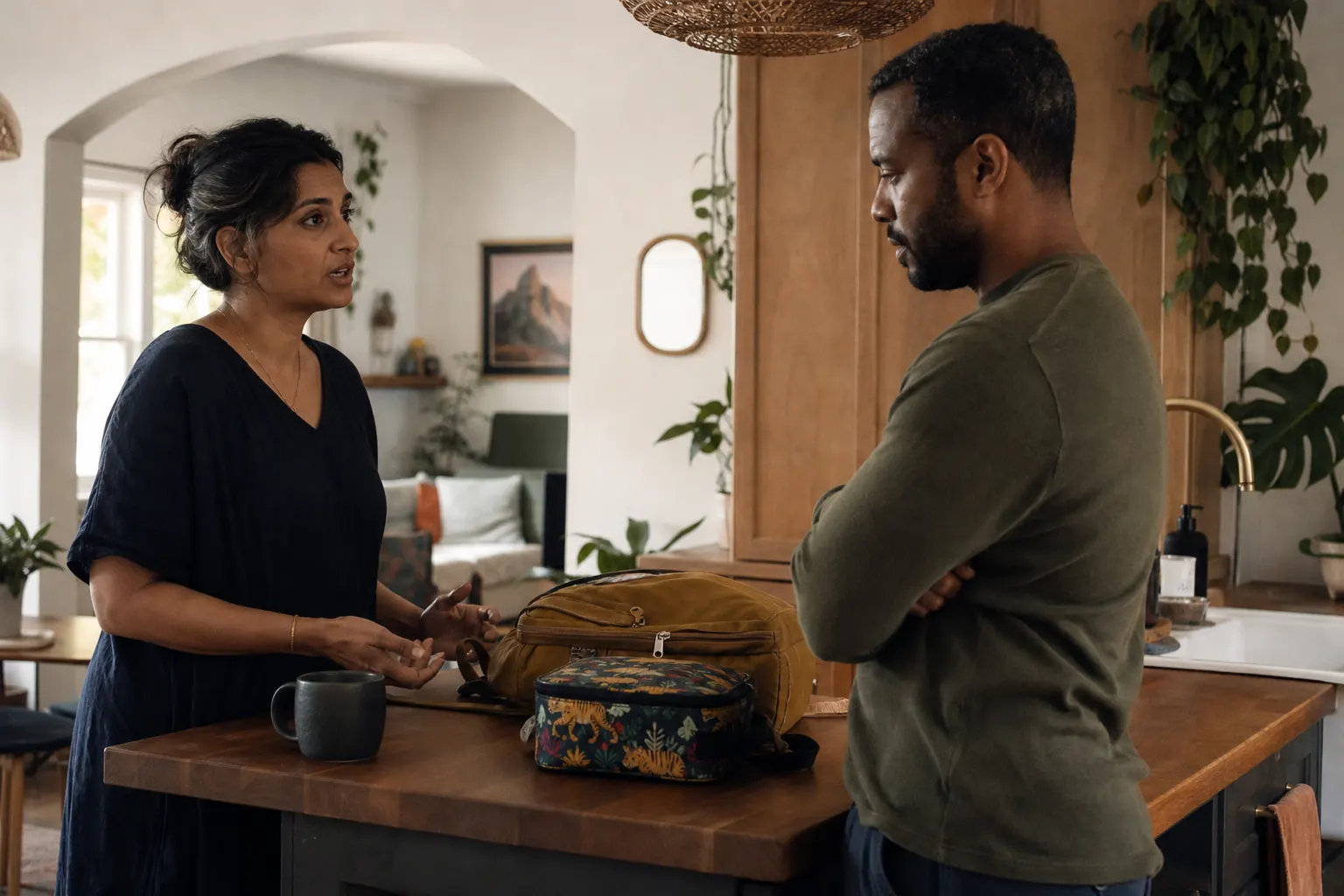


When parenting together has turned into the fight
You both love your kids. You may even agree on most of the big things. And still, bedtime, screen time, homework and who said yes to the sleepover keep turning into the same argument. Or you’ve separated, and every text about pickup times feels like a test. The kids notice, and you know they notice.
Co-parenting counseling is for the adults raising children together who want to stop fighting through the kids and start working as a team again, or for the first time. Some people call it co-parenting therapy. Either way, the focus is the parenting partnership, not a verdict on who’s right. Most of the time, the problem isn’t that one of you is a bad parent. It’s the pattern between you, and that pattern can change.
Who co-parenting counseling is for
I work with the adults: the two (or more) people sharing the job of raising children. That includes:
- Couples who are together and keep clashing over discipline, rules, routines or how much to step in. If the parenting fights are part of a bigger strain, couples therapy may be the better frame.
- Couples who are separating and want to protect the kids while the relationship changes shape.
- Co-parents who are already separated or divorced, whether it was recent or years ago, and are still stuck in the old fight.
- Blended families: a parent and a stepparent, or two households that now include a new partner, trying to agree on roles.
- Co-parents who were never a couple, including friends or chosen family raising a child together.
I see adults only. I don’t see children or teenagers, in sessions or for assessments. If your child or teen needs their own support, I’d suggest a child or adolescent therapist or a family therapist trained for that work. I can support you as the adult parent while that happens.
What I don’t do
It’s worth being plain about this before you book. I’m a therapist, not a mediator, custody evaluator or lawyer. I don’t make custody recommendations, write letters for court or testify about which parent should have the kids. I don’t take court-ordered co-parenting cases, and I’m not able to provide court-approved counseling or certificates of completion.
If you need any of those, a family law attorney, a mediator or a court-connected program is the right place to start. What I can do is help the two of you communicate and cooperate better, which often makes those other processes easier.
Co-parenting counseling also isn’t the right fit when there’s abuse, coercion, or one parent is afraid of the other. Joint sessions can make that more dangerous. In that case, individual support is the better starting point. If anyone is in immediate danger, call 911, and for a mental health crisis, call or text 988.
What co-parents bring in
Different parenting styles
One of you grew up with strict rules and the other grew up with none. One sees a tantrum as a need for comfort and the other sees it as a need for limits. Most parenting disagreements carry each parent’s own childhood inside them. When we find that, the argument usually gets less personal.
Co-parenting after a breakup
The romantic relationship ended. The parenting relationship didn’t. Old hurts leak into handoffs, schedules and birthday plans, and a simple text can carry years of resentment. We work on separating the two relationships so you can be business-like co-parents even if you’re still grieving. If you’re earlier in the decision, discernment counseling can help you get clear, and conscious uncoupling helps couples separate with less damage, especially when there are kids.
Blended families and stepparenting
Blended families take time. A new partner can feel like an outsider in their own home, or like they’re expected to parent without the authority to do it. The biological parent can feel pulled between their partner and their kids. Blended family counseling helps the adults agree on roles, rules and how to back each other up.
Loyalty binds and bad-mouthing
Kids often feel caught in the middle when parents criticize each other in front of them. We work on what each of you can control: how you talk about the other parent, how you respond when you hear what was said in the other house, and how to keep the kids out of the adult conflict.
How I work with co-parents
When co-parents argue, both nervous systems (the body’s built-in alarm system) are usually on high alert. Each of you reacts to the other’s tone or the timing of a text before you’ve really heard the content. So I slow the conversations down in the room, help each of you name what you’re worried about for the kids, and practice new ways to handle the hard moments. I draw on:
- Imago dialogue, from Harville Hendrix and Helen LaKelly Hunt, so each parent actually hears the other before responding.
- Attachment-based work and interpersonal neurobiology, which help explain why parenting stress hits so hard and why old family patterns show up with your own kids.
- Gottman Method tools, from John and Julie Gottman, for starting hard conversations gently and repairing after they go wrong.
- Emotionally Focused Therapy (EFT), developed by Sue Johnson, for parents who are still together and want to see the cycle underneath the parenting fights.
Nobody is the problem. The pattern is.
Cooperative or parallel co-parenting
Not every pair of co-parents can or should be close. In cooperative co-parenting, parents talk often, make decisions together and may share birthdays or school events. In parallel parenting, contact is kept low and structured, often in writing, and each household runs its own way within shared basics. Parallel parenting is often a better fit when conflict is high.
Part of our work is figuring out which model fits your family right now, and what would help you move toward more cooperation over time, if that’s realistic.
What to expect
It starts with a free 20-minute video call. Either parent can book it. We’ll talk about what’s going on and whether co-parenting counseling with me is the right fit.
Sometimes I meet with each parent individually before joint sessions, so each of you can say what you’re worried about without the other in the room. I don’t keep secrets for one parent in the joint work, and I never contact the other parent without your consent. In joint sessions, we focus on a few concrete things: how you’ll communicate, how you’ll make decisions, what to do when you disagree, and how you’ll handle the moments that usually blow up.
How much does it cost?
- 60-minute session: $250
- 90-minute session: $325
- Free 20-minute video consultation
I don’t bill insurance directly. For regular sessions, I can give you a superbill to submit for possible out-of-network reimbursement. Many co-parents split the fee. That’s an agreement between the two of you.
In person in Highland Park, or online across California
My office is at 5317 North Figueroa Street in Highland Park, and I see co-parents online anywhere in California. Online sessions can help co-parents who live in different parts of LA, or who find it easier to talk from separate homes at first. If other adult family members are part of the conflict, family therapy may also help. When you’re ready, book a free consultation.