

What a couples intensive is
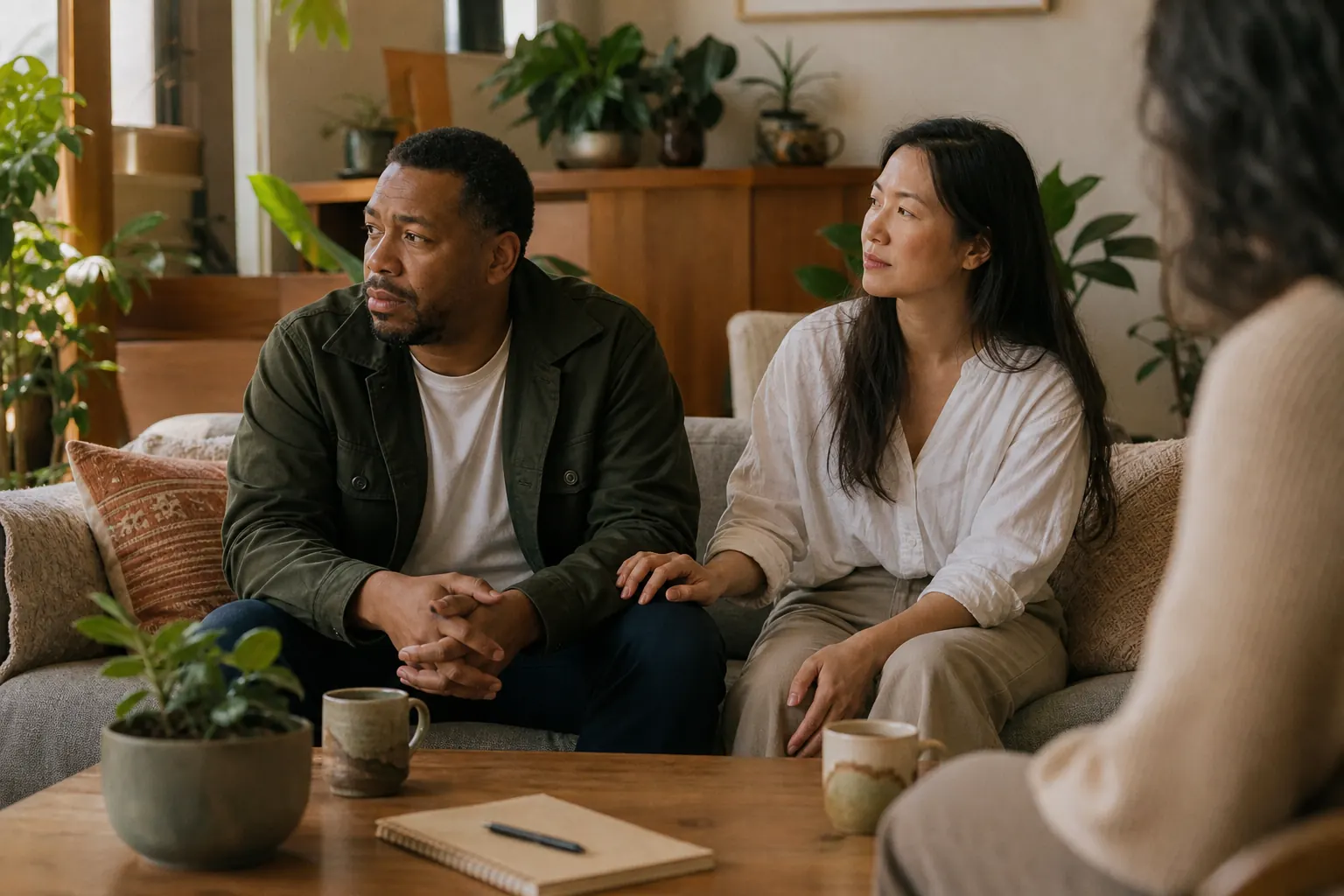
A couples intensive is couples therapy in one long, focused block instead of an hour a week. You and your partner set aside three hours, six hours, or a full day or two, and we work on your relationship without the clock cutting us off just as things start to open up.
Weekly therapy has a familiar rhythm. You arrive, spend the first part catching up on the week, get to the real issue with fifteen minutes left, then go home and pick it up again seven days later. That works well for many couples. For others, especially couples who feel stuck or short on time, the momentum keeps slipping away between sessions.
An intensive gives us room to get underneath the surface argument, see the pattern you keep landing in, and practice something different while it’s happening, all in the same sitting.
Who couples intensives are for
Couples usually look into intensives for one of a few reasons:
- You keep having the same fight and weekly sessions haven’t shifted it.
- You’ve tried couples therapy before and it didn’t stick.
- Something big has happened, like a breach of trust, and you want concentrated time to start repairing it.
- You feel like roommates and want to reconnect before the distance gets wider.
- Your schedules make weekly sessions hard to keep, because of travel, shooting schedules, shift work or young kids.
- You’re facing a major decision or transition and want to approach it together, clearly.
An intensive isn’t the right starting point for every couple. If there is violence, threats, or one of you is afraid of the other, joint sessions aren’t appropriate, and I’ll say so honestly. You can read more on my page about high-conflict couples. If one of you is leaning out of the relationship and the other is leaning in, discernment counseling may be a better first step.
Intensive and retreat formats
3-hour intensive
A focused reset around a specific issue, or a strong start before weekly therapy. We assess the dynamics between you, identify the core pattern and the triggers that set it off, and work on practical ways to interrupt it and repair afterward. You leave with personalized tools to use at home. Common focus areas include recurring arguments, emotional distance, attachment triggers, rebuilding empathy, and intimacy.
6-hour intensive
A full day of work, with breaks, for couples who want to go further. Six hours gives us time to look at where your reactions come from, including childhood experiences and older attachment wounds, and how they collide in your relationship now. We can work on conflict and repair cycles, staying regulated during disagreements, trust, unmet needs and expectations, and the roles you’ve each fallen into. Couples often leave with a clearer map of their pattern and a plan for what comes next.
One-day couples retreat
A structured, therapeutic day set apart from ordinary life and focused entirely on your relationship. It can include goal setting, guided communication exercises, conflict and repair work, understanding attachment and triggers, reconnection exercises, and honest conversations about intimacy and vulnerability. Where it takes place and what the day includes are tailored to what the two of you want and need.
Two-day couples retreat
The most immersive option. Two days allow for extended sessions, emotional and physical intimacy work, structured reflection, and time to talk about the future you want to build. The location, accommodations and what’s included all vary, because I tailor each retreat to what the two of you want and need.
How I work in an intensive
Many couples understand their problem well. They can describe the fight in detail. What they can’t do is stop it once it starts, because by then both nervous systems have taken over. Your nervous system is your body’s alarm system: when it senses threat, it reacts in a split second, long before any communication technique can kick in.
So in an intensive, I don’t just teach skills and send you home. We work with what happens in the room. When the old pattern starts, we slow it down, notice what each of you is feeling and protecting, and try a different move together. Long sessions make this easier, because there’s time to settle again afterward and talk about what just happened.
I draw on several research-based approaches:
- Gottman Method, developed by John and Julie Gottman, for practical tools around conflict, repair and friendship.
- PACT, the Psychobiological Approach to Couple Therapy developed by Stan Tatkin, which works with attachment and stress responses as they happen between you.
- Emotionally Focused Therapy, developed by Sue Johnson, to map the negative cycle and the needs underneath it.
- Imago, developed by Harville Hendrix and Helen LaKelly Hunt, for structured dialogue that helps each of you really hear the other.
- Attachment-based work and interpersonal neurobiology, to understand how early relationships shape the way you connect and protect yourselves now.
I don’t take sides. Nobody is the problem. The pattern is.
What happens before, during and after
Before. It starts with a free 20-minute video call. We talk about what’s going on, which format makes sense, and whether I’m the right fit. Before the intensive, we’ll get clear on what you each want to focus on, so the time is used well.
During. Longer formats include breaks. Some parts are structured exercises, some are open conversation, and some are me helping you slow down a hard moment as it happens. It can be emotional. It’s also often a relief to finally have the time to finish a conversation.
After. You’ll leave with specific things to practice. Many couples continue with weekly or every-other-week couples therapy to keep the changes going. Others come back for another intensive later. We’ll decide together what makes sense.
Couples intensive or weekly couples therapy?
Neither is better. They suit different situations. Weekly therapy builds change gradually and gives you a regular check-in as life happens. An intensive concentrates the work, which can help when you feel stuck, when something urgent needs attention, or when weekly sessions are hard to fit around your lives. Some couples combine them: an intensive to get moving, then weekly sessions to keep going. If you’re not sure which fits, that’s a good question for the free consultation.
How much does a couples intensive cost?
- 3-hour intensive: $600
- 6-hour intensive: $1,100
- One-day and two-day couples retreats: price varies, since each retreat is tailored to the couple
I don’t bill insurance, and I don’t provide superbills for intensives or retreats, so plan on paying for them out of pocket.
In person in Highland Park, or online across California
Intensives can take place at my office at 5317 North Figueroa Street in Highland Park, convenient to Eagle Rock, Mount Washington, Glassell Park, Silver Lake, Echo Park, Pasadena and Glendale. I also offer intensives online anywhere in California, which works well for couples outside LA or with tight schedules.
My practice is LGBTQIA+ affirming, ENM and polyamory affirming, sex-positive, culturally aware and anti-racist. Intensives are open to married and unmarried couples and to people in open and polyamorous relationships. If you’d like to talk through which format fits, book a free consultation.